
casino guide in 2026: the essentials
casino guide starts with a solid discernment of the game’s mechanics. From there, players can develop personalized strategies. casino guide how to win acts as a valuable reference point for making adjustments on the aviate.
See also:
- Is casino guide explained Right for You?
- Your Guide to Leveraging casino guide explained Effectively
- How to Build Your Bankroll with casino strategy guide
- Critical Casino Bonus Wagering Terms Explained
- What Does casino strategy guide Mean for Blackjack Players?
- Visual Guide to Casino Strategy & Rules
- Common Questions About casino guide explained Answered
- Responsible Gambling Tips for Australian Players
Is casino guide explained Right for You?
casino guide is a term often misunderstood by casual players, yet it forms the backbone of successful casino play. By mastering casino guide how to win, you can transform random luck into a structured approach that maximises your chances at the tables. This concept isn’t about superstition or gut feelings; it’s a mathematical framework derived from probability theory and game analysis. At its core, casino guide involves calculating the expected value of every decision you piddle, whether you’re playing blackjack, poker, or roulette. For instance, in blackjack, casino guide dictates when to hit, stand, double down, or split based on your helping hand and the dealer’s upcard. Professional players have spent years memorizing these charts, and they adjust their play according to the specific rules of the table, such as the figure of decks in play or whether the dealer hits on soft 17. In poker, casino guide extends to skunk odds, implied odds, and fold equity, helping you adjudicate whether to call a wager or arouse. Even in games of pure chance like slots, casino guide can guide you in selecting machines with higher return-to-player percentages or understanding bonus features. The true power of casino guide lies in its ability to minimize the house edge over time. While a single session may resultant in losses, consistent application of casino guide explained ensures that your long-term results align with mathematical expectation. For example, in European roulette, the put up edge is 2.7%, meaning that for every $100 wagered, you can expect to lose $2.70 on medium. By using casino guide how to win to manage your bankroll and stake sizing, you can weather the inevitable downswings and capitalize on upswings. Budget management is a critical constituent of casino guide, as it prevents you from going broke during periods of variance. A usual rule of thumb is to never risk more than 1-2% of your total bankroll on a single bet. This approach ensures that you can endure losing streaks and continue playing until positive expected value opportunities come up. Additionally, casino guide involves tracking your results and analyzing your play to key out leaks in your strategy. Many successful players keep elaborated logs of every session, noting the games played, bets placed, and outcomes. Over time, this data reveals patterns that can be exploited or corrected. For example, if you acknowledge that you consistently lose money when playing a particular slot machine, you might choose to avoid it in the future. Conversely, if you discover that you experience an edge in a specific poker variant, you can centering your efforts there. The psychological aspect of casino guide is also crucial.
Your Guide to Leveraging casino guide explained Effectively
Understanding RTP and House Edge in Casino Games
At the spunk of any casino strategy lies a substantial grasp of two profound concepts: Return to Player (RTP) and the house border. RTP represents the theoretical percentage of tote up wagered money that a game will pay back to players over an extended geological period. For deterrent example, a slot with an RTP of 96% will, in theory, return £96 for every £100 wagered, though this is calculated over millions of spins and does not assure individual results. The put up edge is the mathematical advantage the casino holds, which is essentially 100% minus the RTP. In the UK market, where the UK Gambling Commission (UKGC) regulates all licensed operators, games must stick to to strict fairness standards, but the house edge remains a inbuilt feature. Recognising that no offering offers a 100% RTP is crucial; even games like blackjack or video poker, which can have a house edge below 1% when played with optimal strategy, still favour the casino in the long run. Players should prospect RTP as a long-term indicator kinda than a hope for any single session. When selecting games, it is wise to choose those with higher RTP percentages, as they statistically erode your bankroll more slowly. However, remember that RTP is calculated over an enormous number of rounds, so short-term variance can conduct to significant wins or losses regardless of the percentage. This understanding forms the bedrock of any sensible gambling approach, allowing you to exercise set realistic expectations and bypass the misconception that you can consistently beat the system. In practice, combining knowledge of RTP with proper bankroll management and game selection can enhance your overall experience, but it never eliminates the inherent risk of exposure. The best strategy is to treat gambling as entertainment, where the cost of playing is the put up edge, and any winnings are a bonus. By internalising this, you can wee informed decisions virtually which games to play and how much to wager, keeping your sessions enjoyable and within your means. Ultimately, the put up edge is the casino’s profit margin, and no strategy can overcome it in the long term—but savvy it allows you to play smarter, not harder.
Bankroll Management Techniques for UK Players
Effective bankroll management is arguably the most vital component of a successful gambling strategy, yet it is often overlooked by casual players. In the UK, where casinos supply a vast array of games from slots to live dealer games, setting a budget and sticking to it is essential to avoid financial tense. The first rule is to determine on a gambling budget that is separate from your everyday expenses—money you can afford to lose without impacting your lifestyle. A common approach is the ‘building block system’, where you divide your total balance into smaller units, typically 1% to 5% of your total funds per bet. For instance, if you get a £500 bankroll, a unit might be £10, meaning you wager no sir thomas more than £10 per spin or hand. This method ensures you can withstand losing streaks without depleting your funds too quickly. Another technique is setting win and loss limits for for each one session. A win limitation mightiness be 50% of your starting bankroll, so if you begin with £100, you stop playing once you reach £150. Similarly, a loss limit could be 30%—if you drop to £70, you walk away. These limits help lock in profits and prevent chasing losses, a common pitfall that leads to reckless betting. Additionally, take the volatility of the games you choose. High-volatility slots may give larger payouts but come with longer dry spells, requiring a larger bankroll to sustain play. Low-volatility games provide smaller, more frequent wins, which can prolong your session but may give less excitement. Adapting your bet size according to your bankroll is also vital; as you win, you can increase your unit size slightly, but never double down after a loss. The Martingale system, where you double your bet after each loss, is particularly dangerous because a long losing streak can quickly top your bankroll or table limits. Instead, employ a flat-betting strategy or a conservative progressive system like the 1-3-2-6 for games like baccarat. Remember, the goal is to maximise entertainment value while minimising risk of infection. By adhering to these principles, you can try gambling as a leisure activity rather than a financial burthen. In the UK, responsible gambling tools such as deposit limits and time-outs are often available through operator accounts—use them to enforce your strategy.
How to Build Your Bankroll with casino strategy guide
Setting Your Bankroll Limits
Establishing crystallise boundaries for your gambling balance is the cornerstone of responsible play. Before you even out open a game, decide on an amount you are comfortable losing—this should be money set aside purely for entertainment, not for bills or essentials. A common guideline in Australia is the 1% to 5% rule: for to each one session, wager no more than 1% to 5% of your total bankroll. For example, if you have a bankroll of $1,000, your session limit would be between $10 and $50. This approach ensures you can withstand losing streaks without depleting your cash in hand too quickly. Additionally, always set a loss limit for the day—once you bang that number, walk forth. Many top Australian casinos offer tools like deposit caps and session reminders to facilitate you stay on runway. Think back, the goal is to extend your playtime and enjoyment, not to chase losses. To further refine your limits, take your typical session length and betting frequency. If you play for two hours at a pace of 10 spins per minute, a $50 session limit with $0.50 spins gives you 100 spins, which may last only 10 transactions if you bet aggressively. Adapt your bet size or session duration to align with your entertainment goals. For example, if you require to play for an time of day, set a bet size that allows 300 spins: with a $50 budget, that agency $0.17 per spin. Many Australian players also take in the ‘50% rule’—if you win a important amount, set aside half as profit and continue with your original budget. This locks in gains while maintaining discipline. Always review your bankroll limits monthly, as your financial situation may change. A sudden windfall or disbursal should prompt a reassessment of your gambling budget. Finally, never borrow money to gamble; if you cannot afford to lose, do not play. By establishing and adhering to these boundaries, you transubstantiate gambling from a financial risk into a controlled leisure activity.
Allocating Funds Per Session
Once your overall balance is defined, breakout it down into session-specific allocations. A practical method is to carve up your total bankroll by the figure of sessions you programme to have in a month. For instance, with a $500 monthly balance and quaternion sessions per calendar week, each session would have a budget of around $31. This prevents you from overspending in a single sitting. Within each session, further divide your balance into smaller bets. For pokies, a good rule is to keep each spin at 1% to 2% of your session budget. So with a $31 session, bets should be between $0.31 and and $0.62 per spin.
.62 per spin.
lotto casino login 2026 — lotto casino login page
Critical Casino Bonus Wagering Terms Explained
- 43% reload bonus
- $1000 + 150 free spins
- 25x turnover in 7 days
- 35x playthrough
What Does casino strategy guide Mean for Blackjack Players?
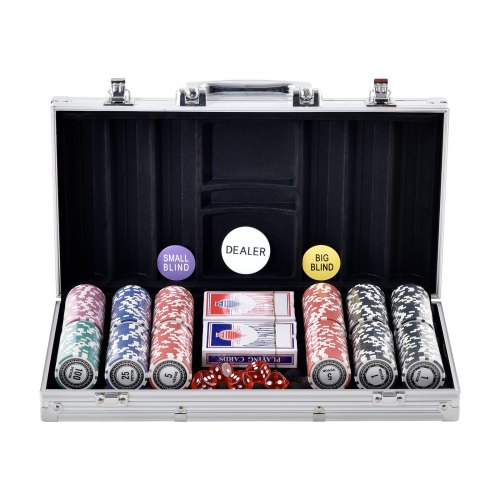
Visual Guide to Casino Strategy & Rules
Common Questions About casino guide explained Answered
What is the house edge and how does it affect my chances of winning?
The house sharpness is the mathematical advantage a casino has over players in any given game. It is built into the game rules and ensures the casino makes a profit over the long term, but it does not assure you will lose every session.
How do I care my bankroll effectively when gambling?
Funds management involves setting a budget for your gambling sessions and sticking to it. A common decree is to only wager a small percentage of your total bankroll per stake, typically 1-5%, to minimise the risk of losing everything quickly.
What is RTP and why is it important?
RTP stands for Take back to Customer, a theoretical percentage that indicates how much of all wagered money a product will pay back to players over time. A higher RTP, such as 96% or higher up, generally offers better long-term value, but it does not forebode short-term results.
Can I use strategies to assure winning at casino games?
No strategy can guarantee consistent wins because casino games are based on chance and the house inch. Strategies ilk the Martingale system of rules can assist care bets, but they pack high risk and can lead to significant losses during losing streaks.
What is responsible gambling and how do I practice it?
Responsible gambling means treating it as entertainment, not a way to make money. Set time and money limits, never chase losses, and take fixture breaks. Use tools the like deposit limits or self-exclusion offered by reputable platforms to detain in control.
Our guide to casino guide covers game selection and payout speed.
bit starz slots — what to know 2026 | bit casino
australian online gambling sites 2026 — everything to know
Responsible Gambling Tips for Australian Players
Gambling is strictly for adults older 18 and over. All UK-licensed casinos are regulated by the Gambling Commission (UKGC) and must offer access to GAMSTOP, the national self-exclusion scheme. For free, confidential support, contact GamCare via the National Gambling Helpline on 0808 8020 133. Always localise deposit and time limits, and remember to chance only for entertainment, never to tail losses.